


Dryad – Nymph of the Tree, Spirit of the Forest
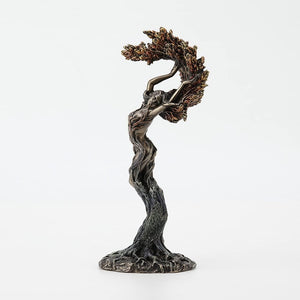
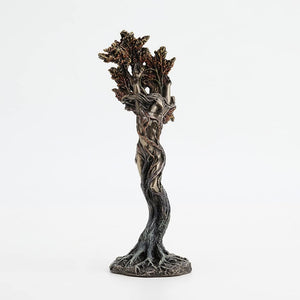
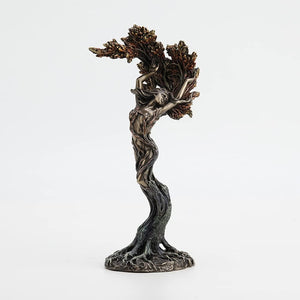
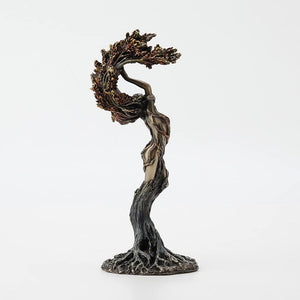
The Dryad – the mythical tree nymph of Greek mythology, a forest spirit fused with the oak, whose life and fate were inseparably bound to the existence of her protectress – is shown here in a deeply lyrical moment of transformation between the body of a woman and the crown of a tree. The slender, nude figure of the forest being emerges from a twisting trunk, her arms raised skyward, blossoming at last into a golden-amber crown of oak leaves cascading in a graceful crescent. The lower half of her form dissolves into roots and woven bark, the roots growing into a moss-covered base, and the contours of the female body flow seamlessly into the texture of the plant – one of the most beautiful mythological images of the unity of human and nature, an embodiment of the seasonal cycles, the secrets of the forest, and primal feminine vitality. The entire sculpture is handcrafted, which makes every piece truly one of a kind – subtle variations in patina, the intensity of the amber-copper highlights on the leaves, the depth of the moss tones on the roots, and the delicate hues of the nymph's skin ensure that each figure carries the individual trace of the artist's hand. The body of the dryad is finished in a warm copper patina with a satin sheen, contrasting beautifully with the cool, mossy-green tones of the trunk and base and with the rich autumnal palette of gold, ochre, copper, and deep rust in the leafy crown – every single leaf has been worked individually, as in a botanical study. The composition itself, slender and vertical, draws on the finest tradition of Art Nouveau sculpture and Symbolism, while preserving an utterly contemporary, almost poetic resonance. This is a sculpture of exceptionally subtle, contemplative presence – ideal for an elegant living room, a bedroom, a private study, a library, or the shelf of an enthusiast of mythology, Art Nouveau, Romanticism, esotericism, or the spirituality of nature. It brings into any interior the atmosphere of forest silence, mystical femininity, and a deep, almost primal bond with the natural world, becoming an object that is not merely decorative but profoundly poetic – a sign of transformation, organic beauty, and that delicate threshold where the human world meets the realm of forest spirits, of trees, and of the eternal rhythms of the earth.
